
Landmark investment backs strategic heat infrastructure for London
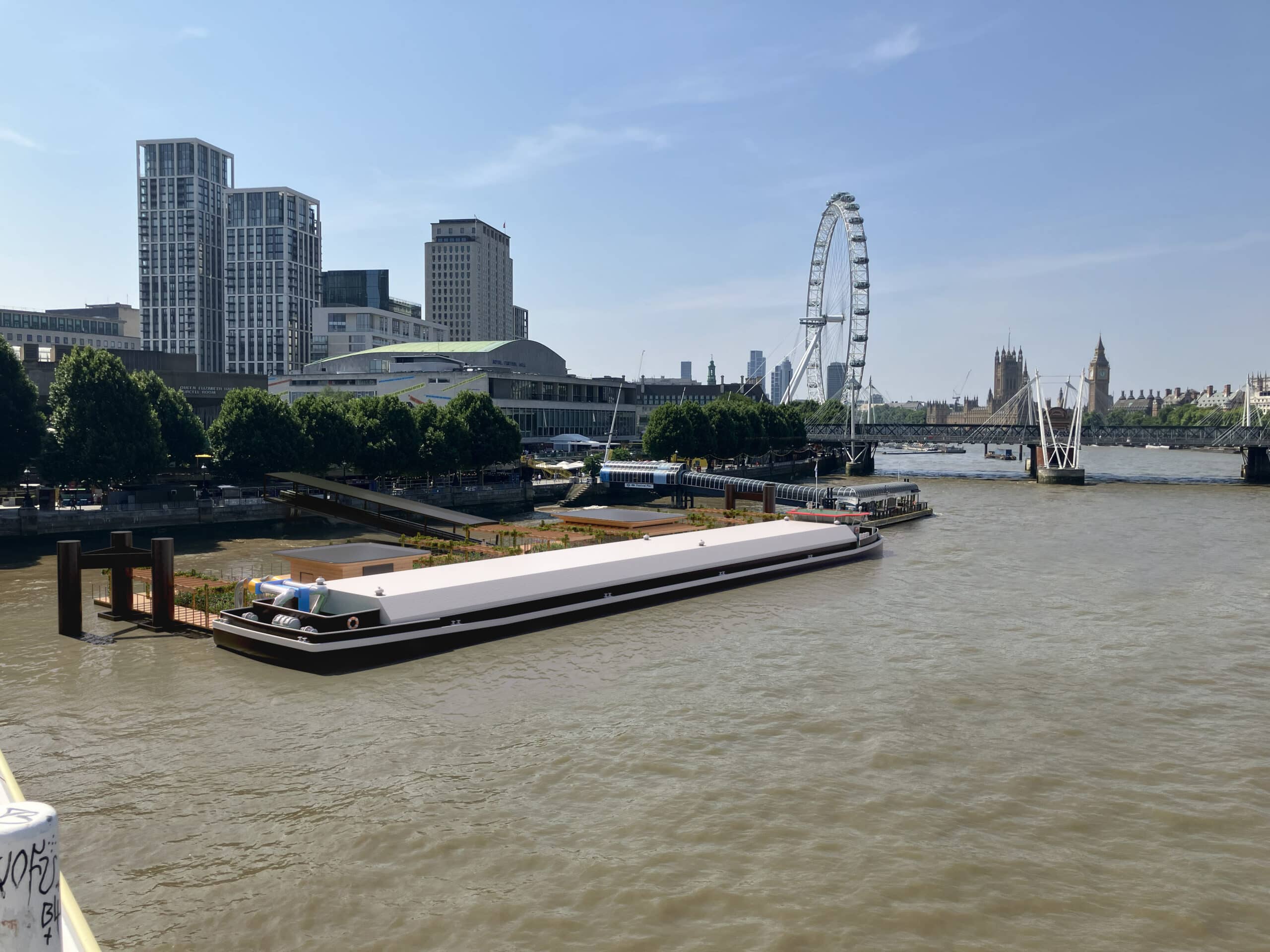
The London Strategic Heat Main project has been awarded £41.63m, £1m of commercialisation funding and £40.63m of construction funding through the Government’s Green Heat Network Fund. The project will transport low-carbon heat more than 25km from the Thames Estuary into central London, supplying local heat networks serving more than one million people.
- By replacing gas boilers, the system is expected to cut carbon emissions from heating by around 95% and eliminate boiler nitrogen oxide emissions at source.
- While the permanent tunnel is developed, low-carbon heat will be delivered along the Thames by electric thermal barges from 2028.
- The project will help unlock c. £5bn of investment in London’s local heat networks and support skilled jobs in tunnelling, engineering and river logistics.
- Separately, the Riverside Heat Network has been awarded £11.51m of construction funding to supply low-carbon heat to local consumers in the Boroughs of Bexley and Greenwich.
RHN Developments Limited, a Cory Group company, has secured £53.14m across two projects through the Government’s Green Heat Network Fund (GHNF) administered by Triple Point on behalf of the Department for Energy Security and Net Zero. The London Strategic Heat Main will receive £1m of commercialisation funding and £40.63m of construction funding, while the Riverside Heat Network will receive £11.51m of construction funding.
The London Strategic Heat Main award is the first made under the GHNF’s new “Strategic Heat Main” funding category. The category recognises networks that distribute heat at scale via transmission mains to multiple demand centres.
The London Strategic Heat Main (LSHM) consists of hot water pipes, housed in tunnels, bringing low-carbon heat more than 25km into central London. The initial transmission trunk is intended to cross seven Boroughs: from Cory’s Riverside Campus in Belvedere, Bexley, through Greenwich, Lewisham, Southwark, City of London, Lambeth, and Westminster. Further transmission branches are under consideration for Barking and Dagenham, Tower Hamlets and Kensington and Chelsea.
This is the first UK strategic heat main on the scale of European systems, which have operated for decades in cities like Copenhagen, Amsterdam, Vienna and Berlin. They are also used in Asian cities like Seoul and under construction across China. In cities like Paris, Abu Dhabi and Singapore, large scale heat networks are increasingly supplying cooling too – including from waste heat sources, by use of absorption chillers.
The LSHM is designed to make London’s heating system less dependent on gas, improving energy security and helping protect consumers from future gas price shocks. When Ukraine was invaded, energy costs in the UK rose by c.250%, split between bill payers and taxpayers. In Copenhagen – which taps into regional heat sources connected by strategic heat mains – heating costs rose by just around 20%.
The move away from gas can also make a significant contribution to London’s decarbonisation targets. Currently, gas boilers account for nearly half of carbon emissions in central London, and are the largest source of nitrogen oxides (NOx). By replacing gas heating, the LSHM would reduce carbon emissions by around 95% – equivalent to taking c.270,000 cars off the road if used at full capacity – while eliminating boiler NOx emissions at source.
Building and operating the network will also create growth and jobs. According to Local Area Energy Plans, the district heating networks which the LSHM would serve would unlock more than £5 billion of local investment. The construction would also support highly skilled tunnelling jobs, drawing on UK skills supported by legacy tunnelling projects, such as Crossrail and Thames Tideway.
While the LSHM tunnels are under construction, heat will be supplied by electric barges, based on vessels used on the Rhine and Danube. The barges will carry heated water up the Thames and deliver it to large, insulated hot water tanks housed in new pontoons, allowing heat to reach central London from 2028. The project is exploring configuring these pontoons as “Thames Floating Gardens”, with the potential to create new spaces and greenery, like the Thames embankments built to house the London Underground and major sewers in the 19th century.
The project is sponsored by Cory, a London business which has been operating for over two centuries and has invested over £900m in infrastructure along the Thames in the last three years. As well as owning and operating the anchor heat source – Europe’s largest single-site energy from waste campus, located on the Thames in Bexley – Cory operates a fleet of over 60 barges, moving waste and byproducts along the river, taking over 100,000 vehicles off London’s roads annually. Cory’s marine logistics division would oversee the heat barges operation.
Other GHNF supported projects, including Hemiko’s Waterloo and Southbank heat network, and L&Q’s Barking Riverside project – East London’s largest new neighbourhood, where Barking Riverside Limited, a joint venture between L&Q and the Mayor of London, is delivering up to 20,000 homes alongside extensive social infrastructure and green space, are already working with Cory to explore how additional capacity from the system could support these developments through localised long-term supply agreements and pricing arrangements.
In March 2026, the LSHM was designated a priority to deliver the London Growth Plan. On 3 July 2026, the project passed its first substantial planning milestone, following the process used for nationally significant infrastructure such as Sizewell C and Thames Tideway.
The Riverside Heat Network is a collaboration between Vattenfall and Cory. Working closely, the partners have helped bring the project forward and, subject to a separate planning and development process, the network has the potential to serve tens of thousands of homes, including existing social housing and new homes. Designed to operate independently from day one while remaining capable of connecting to the London Strategic Heat Main in the future, Riverside Heat Network will help unlock the wider potential of heat networks across the capital and extend the benefits of sustainable heat to more communities.
“We’re delighted to announce the detail of these two awards from the Green Heat Network Fund. The London Strategic Heat Main is a genuinely game-changing project for London and the mobile heat barges are a key enabler of it. With the potential to deliver low-carbon heat from 2028, ahead of the tunnel’s construction, they significantly reduce demand-side risk, giving developers and investors the confidence to commit to local network growth now. Delivered well, the London Strategic Heat Main won’t just transform how the capital heats itself – it will be an exemplar for strategic transmission networks across the UK.”
“This award is a major vote of confidence in heat transmission as part of the UK’s future energy infrastructure. The London Strategic Heat Main will allow us to capture surplus low-carbon heat and move it to where it is needed, helping to cut carbon, improve energy security and support new investment across the capital.
“By delivering heat by barge while the permanent tunnel is developed, we can start serving Londoners sooner and demonstrate a model that could be replicated in cities across the UK.”
“Strategic heat transmission is the missing piece of the puzzle for unlocking cheap, low-carbon heat at scale. There is so much wasted heat in towns and cities, the challenge is getting it to the right place and then into a useable format for customers. Projects like the LSHM have the potential to transform how cities across the UK drive down heating cost. For network developers like Hemiko, connecting into a major source of low-cost heat will allow us to build and expand local heat networks more quickly, bringing cheap, local, secure heat to more and more buildings.”
“We welcome this important support for the London Strategic Heat Main project and the shared ambition it represents to strengthen London’s energy security and accelerate the transition to low-carbon heat. The Green Heat Network Fund award for Riverside Heat Network is a significant step forward, helping us to unlock locally sourced heat for homes, businesses and public buildings. We look forward to continuing our collaboration with Cory to deliver sustainable heat infrastructure that brings lasting benefits to communities across London.”
“This is an exciting and innovative way to use the tidal Thames to transport cheap and clean heat from where it’s produced to where it’s needed. It demonstrates the potential of the River Thames in connecting communities and businesses for a lower carbon future. We look forward to working with the London Strategic Heat Main partners as they progress their plans, whilst respecting the unique river environment and the safety of all river users.”
NOTES TO EDITORS
About the London Strategic Heat Main
The London Strategic Heat Main is the UK’s first large-scale heat transmission system — infrastructure that has existed for decades across Europe and Asia. Built as a new tunnel running over 25km from the Thames estuary into central London, it will transport surplus low-carbon heat — and potentially cooling — to local distribution networks serving over one million people. Designed to draw on multiple heat sources over time, it is a designated priority under the London Infrastructure Framework – the priority projects designated by the Mayor of London and London Councils to delivering the London Growth Plan.
The London Strategic Heat Main will seek consent under the Development Consent Order (DCO) process used for nationally significant infrastructure such as Sizewell C and the Thames Tideway Tunnel. The main was designated nationally significant by the Secretary of State in August 2025, and on 3 July 2026 it submitted a request for a scoping opinion from the Planning Inspectorate.
The approach is also already working at a smaller scale across the UK. The Leeds PIPES scheme takes waste heat from a local energy-from-waste plant to over 4,000 homes, as well as a local hospital, university and public buildings.
About Mobile Heat and the floating gardens
Mobile Heat is the project’s bridging solution while the tunnel is consented and built. Liquid carrier barges carry heated water up the tidal Thames from Riverside to large insulated hot water tanks housed in new pontoons along the river, allowing low-carbon heat to be delivered from 2028. The project intends to configure these pontoons as floating gardens, subject to planning and local agreements.
Further detail on the LSHM and Mobile Heat is available at: www.londonheatmain.co.uk
The Green Heat Network Fund (GHNF)
The GHNF is a Government fund administered by Triple Point on behalf of the Department for Energy Security and Net Zero, supporting the commercialisation, construction and expansion of low-carbon heat networks. This is the first award made under a new “Strategic Heat Main” funding category for heat transmission schemes.
A multi-year, capital grant fund that opened to applicants in March 2022, with funding allocated up to 2029/30 the GHNF supports organisations in the public, private, and third sectors in England and Wales.
The GHNF is a key part of plans to reduce carbon emissions from heating homes and businesses by 2050.
A high-level summary of GHNF is available at: https://www.gov.uk/government/publications/green-heat-network-fund-ghnf
For further information about the scheme and to join the TP Heat Networks mailing list to receive updates, please contact us: enquiries@tp-heatnetworks.org.
For more information about Triple Point Heat Networks Investment Management, applying for GHNF support, and successful projects under GHNF and Heat Networks Investment Project (HNIP), visit: www.tp-heatnetworks.org.
About Cory
Cory is one of the UK’s leading waste management and recycling companies that has served London for over 200 years, with the River Thames at the heart of its operations. It has invested over £900m in infrastructure along the Thames in the last three years, including its Riverside campus in Belvedere — one of the largest single-site energy from waste operations in Europe.
About Triple Point
Triple Point Heat Networks Investment Management is a trading style of Triple Point Investment Management LLP, part of the Triple Point Group of companies. Headquartered in London, Triple Point is authorised and regulated by the Financial Conduct Authority (FCA). Triple Point is a certified B Corp.
For all media enquiries, please contact: comms@tp-heatnetworks.org.
About the Port of London Authority
- The Port of London Authority (PLA) is the trust port responsible for the tidal River Thames, overseeing 95 miles of river.
- The PLA manages navigation and works to keep commercial, recreational and passenger river users safe on one of the UK’s busiest waterways.
- The Port of London is the UK’s largest port by tonnage, playing a critical role in supporting trade and the national economy.
- As a self-financing trust port, the PLA has no shareholders and reinvests any surplus income back into the river, infrastructure and local communities.
- The organisation works to protect and enhance the environment of the tidal Thames, promoting sustainable development, biodiversity and cleaner waterways.
- Through its Thames Vision 2050 strategy, the PLA is working with industry, government and community partners to create a safer, cleaner and more sustainable Thames Estuary.
- For more information, visit pla.co.uk